
Author: Monumentanea
-
The images of Sinéad O’Connor

I have been reading many reactions to the death of Sinéad O’Connor. They never touch on an important aspect of her work. One of Miguel Esteves Cardoso’s recent columns is an example of this omission. He writes that we don’t really want to “get to know the artist behind the work. […] We like the…
-
AI Generates Unrequested Donald Trumps
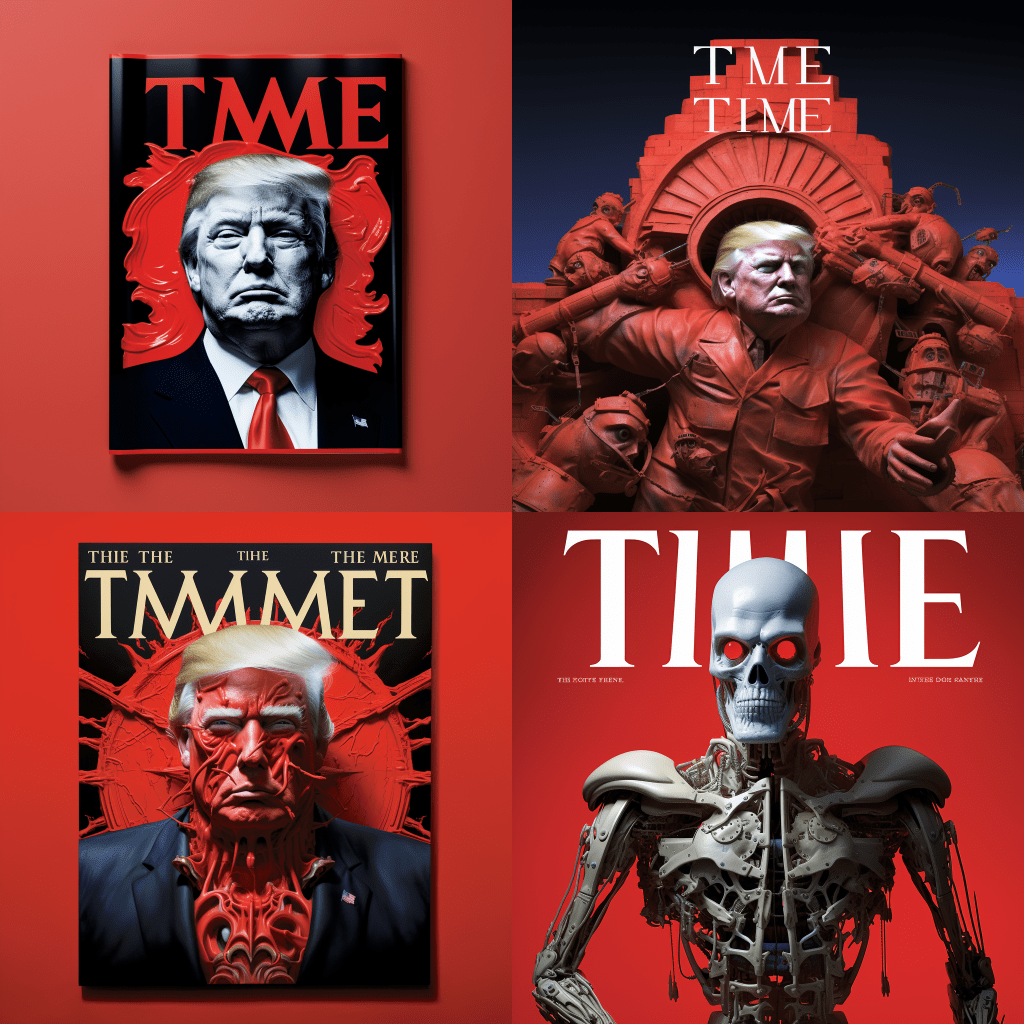
Every once in a while, I subscribe Midjourney and run some tests. In this one, I just asked for “Times Magazine masthead.” It generated three (unrequested) Donald Trump covers and a fourth that seems to be, appropriately, about the dangers of AI.
-
Do AIs dream of corporate brands?
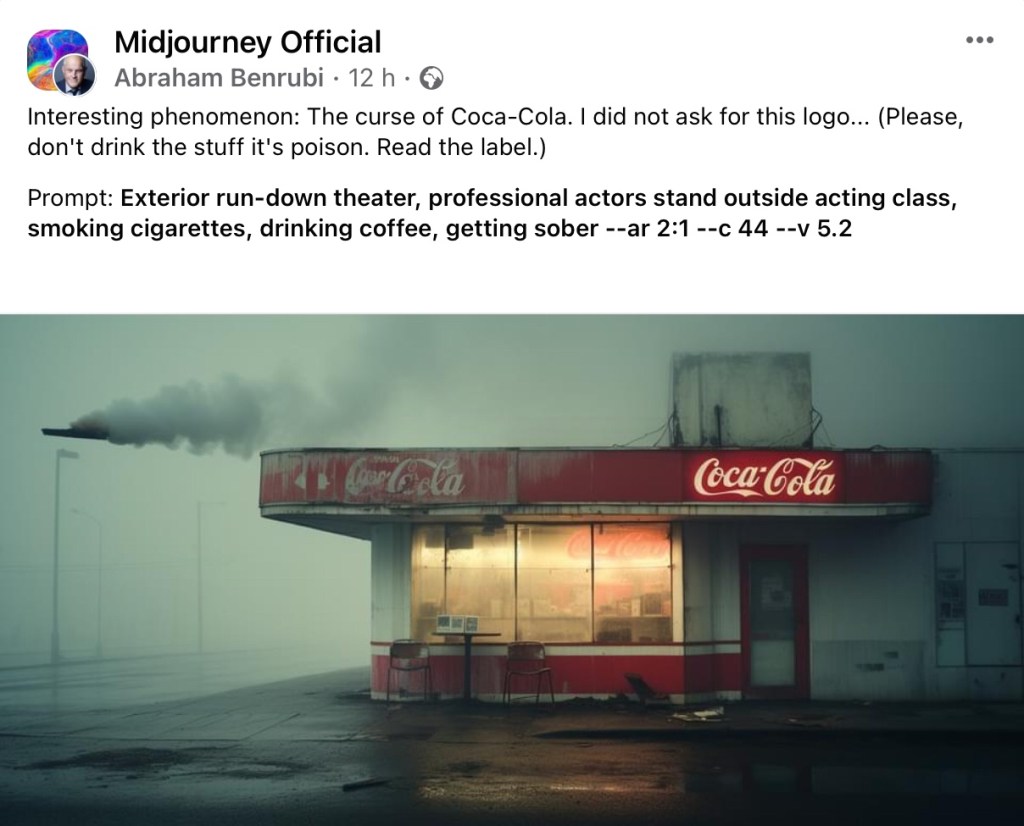
Midjourney generates Coca-Cola logos spontaneously so often that there is a name for the phenomenon: the Coca-Cola Curse. What astonishes me is the legibility of these logos, unlike most AI-generated text. The first image was created by Abraham Benrubi. The subsequent images were prompted by me using simple requests for the brand’s name. Interestingly, to…
-
Is there an ethics of graphic design?

It is almost a commonplace to state that all design is political. If nothing else, it is often added, because everything is political. Regarding ethics, the situation could not be more distinct: there are frequent appeals for the development of an ethics of design. Ethics is almost always placed outside of design, in the future…
-
Why the aversion to self-reflexive design?

W.J.T. Mitchell developed the idea of Metapictures in the book “Picture Theory” (1994). These are images about images. They can be cartoons about cartoons, photographs about photography, cartoons about photography, and so on. They can even theorize about images – hence “Picture Theory.” Magritte’s painting “The Treachery of Images,” commonly known as “This is not…
-
The Non-Visual Origins of Corporate Image
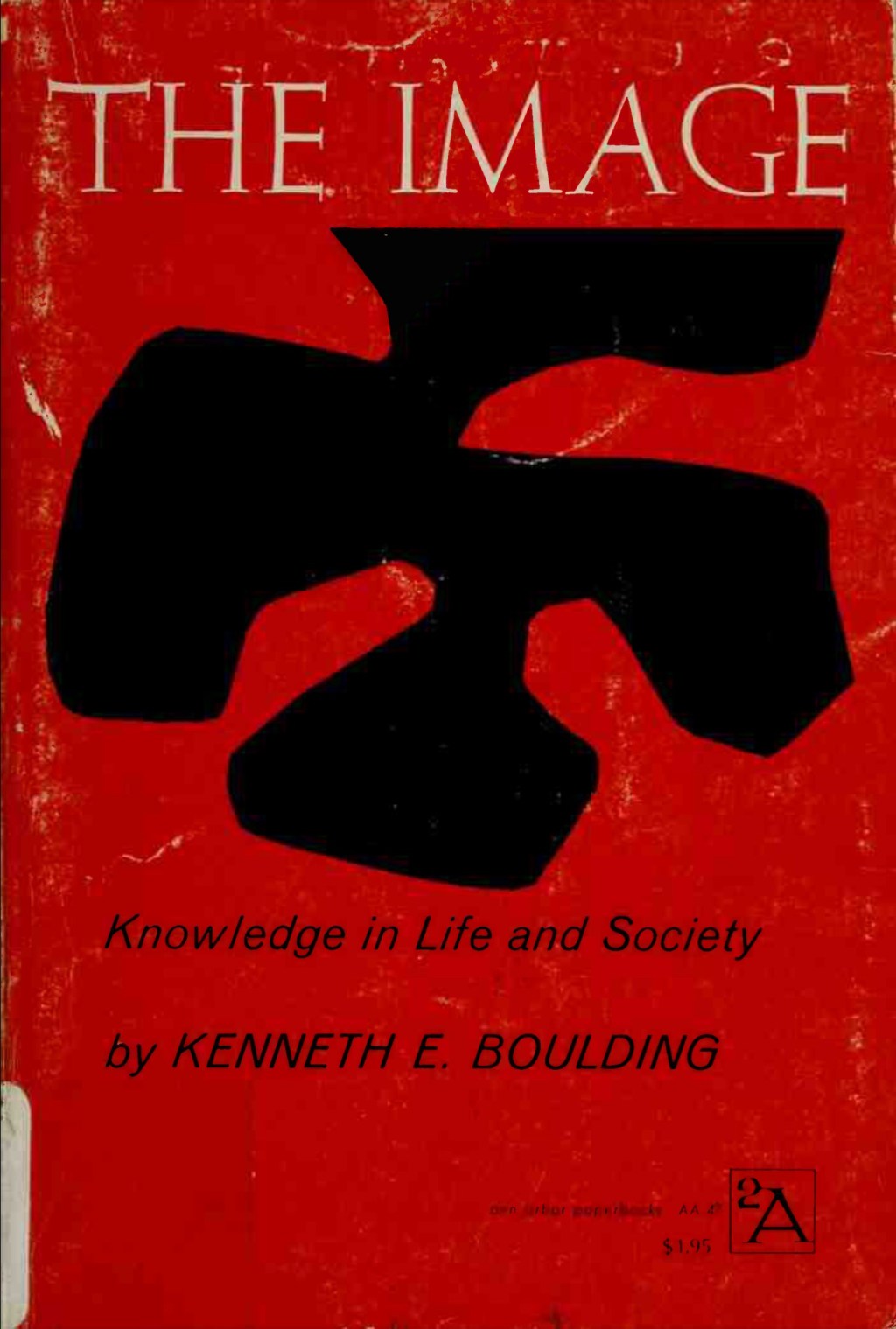
It is likely that “corporate image” is the most famous use of the word “image” within graphic design. However, this concept is startlingly non-visual. In their Graphic Design History, Johanna Drucker and Emily McVarish discuss the role of Kenneth Boulding’s 1956 book, The Image, in promoting graphic design among corporate managers: «The idea of value…
-
The roles of neglecting images, form and style in graphic design’s political discourse
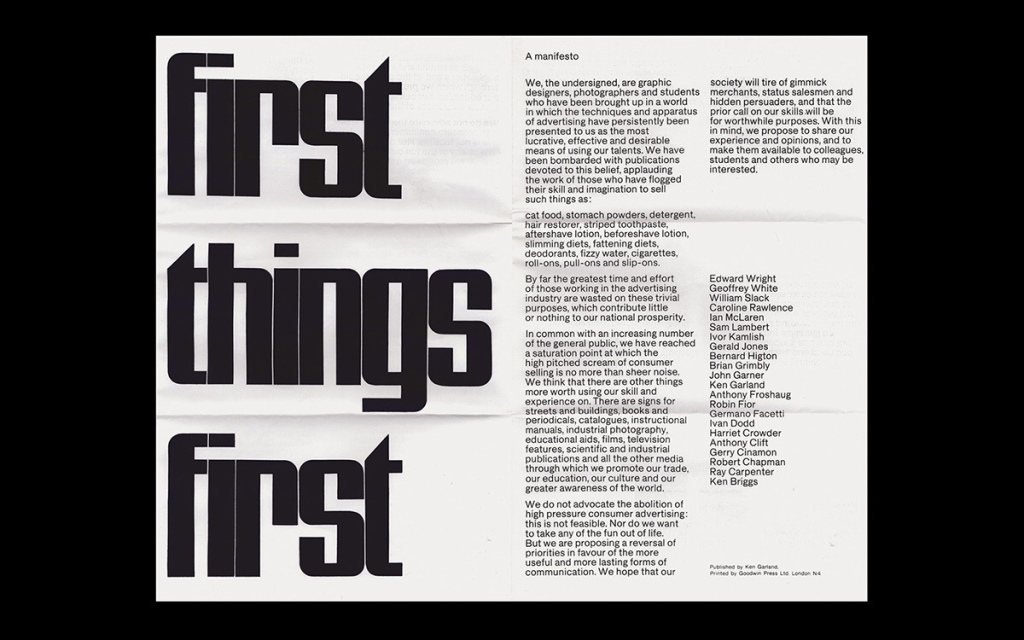
It is not that designers avoid images. The issue is that they don’t speak about them — particularly when compared to the attention to detail devoted to typography. Conversations about form or style are infrequent and often vague, primarily consisting of labeling as “trendy” work and designers you disapprove of. This widespread avoidance of discussing…
-
Defining social, moral and political Borders: the Text/Image divide in Graphic Design

One of the crucial social functions of graphic design is enforcing the boundaries between text and image. These limits form a profound political, social, moral, and religious frontier. Within the field of graphic design, the demarcation lines separating text and image are crucial in defining what falls within the discipline of graphic design and what…
-
Exploring Design’s Shift Away from Image
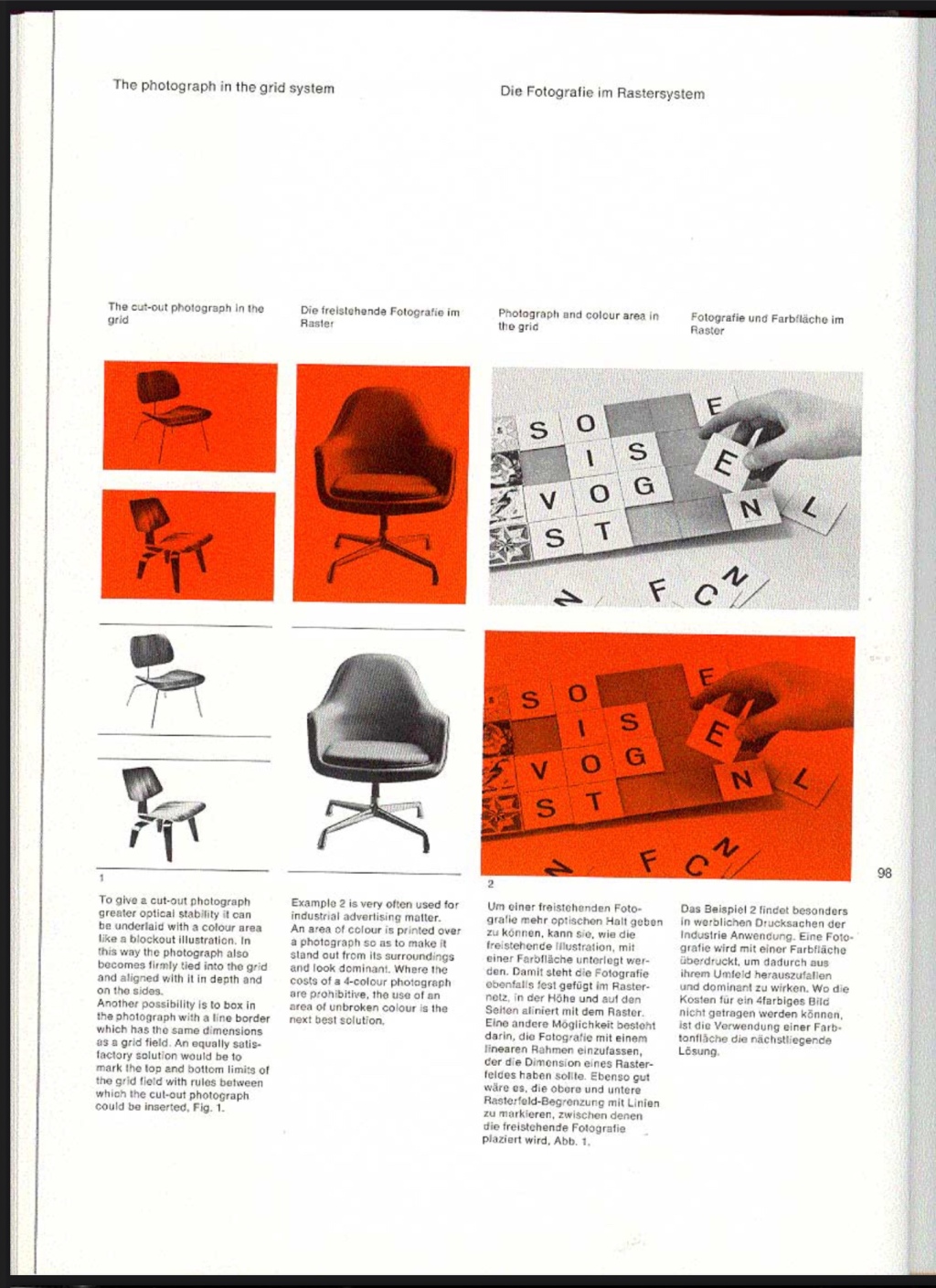
In my last piece, I argued that design shifted its focus away from images at a time when these are all-pervasive. It is plausible to suggest that graphic designers embraced a greater specialization in typography to avoid obsolescence. If everybody is now an image-maker, we could care for the “rest.” While we may perceive our…
-
Design and image?
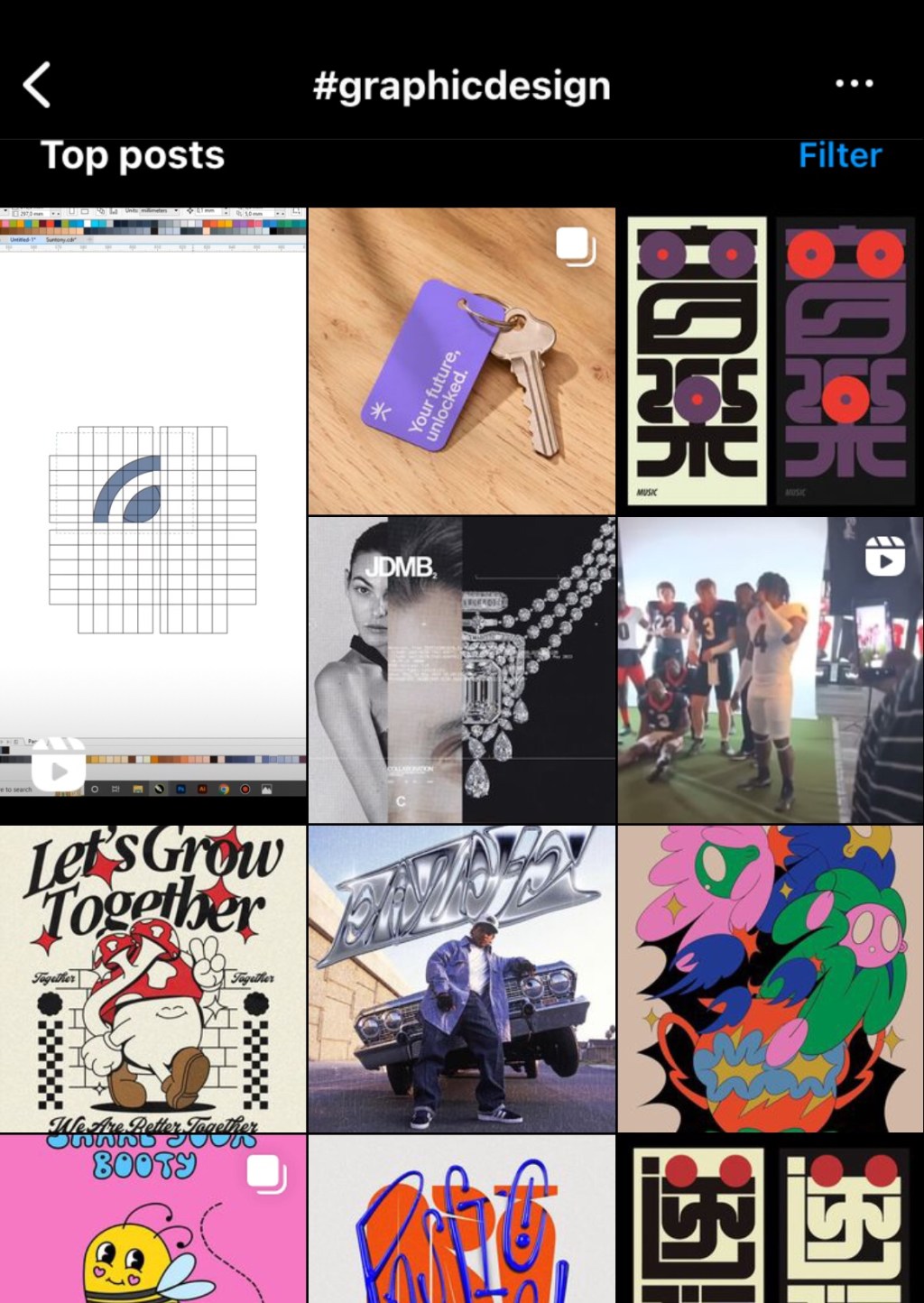
How can you tell if an Instagram account belongs to a graphic designer? While most people use the platform to display photos, graphic designers show letters: fonts, logos, posters, magazines, books, or websites. Even more fascinating is their use of a social network made for showcasing for photos to share little textual slideshows. This tendency…
 Unseen by Design